Top Concrete Service


Blog
Best Garage Floor Coating Louisville KY for Weather, Hot Tires, and Humidity
Louisville garages face more than one kind of stress. A slab may see humid summer air, freezing winter temperatures, rainwater, road residue, hot tires, and sunlight near the open door. The best garage floor coating Louisville KY is not chosen from a color board alone. It is selected for the way the space is used.
What Louisville Coating Pages Do Well
The ranking pages focus on service conversion. Their primary goal is not a long technical review. It is to help a local homeowner decide whether professional garage floor coating installation is the next step.
Diamond Custom Coatings
The likely goal is direct service sales. Local homeowners are moved toward a consultation or estimate. The tone is visual, confident, and benefit-led.
CTA type: application or estimate request.
Format: buttons, phone contact, and service links.
Audience: warm B2C prospects.
Epoxy Floor Hero
The Louisville landing page is designed to capture searches from homeowners who already know they want an epoxy garage floor or a similar resin system.
CTA type: quote request or consultation.
Format: prominent conversion blocks and contact options.
Audience: warm prospects comparing installers.
GatorGuard Louisville
The location page combines product education with a local service offer. Its desired action is a contact request from a visitor seeking a durable floor solution.
CTA type: application or booking.
Format: benefit copy, forms, and buttons.
Audience: cold-to-warm B2C visitors.
Across the SERP, common CTAs include “get a quote,” “schedule an estimate,” “contact us,” and “learn more.” A stronger version should explain the value of the next step. A slab inspection reduces uncertainty. It helps match the floor coating to moisture, traffic, traction, and appearance goals.
How Kentucky Conditions Affect a Garage Floor

Louisville sits near the Ohio River, but its garages do not have one simple climate condition. Unconditioned spaces can shift with outdoor temperatures. The concrete may be much colder or warmer than the rooms inside the home.
Temperature changes
Seasonal movement can stress weak adhesion. The system needs suitable bonding and the right amount of flexibility.
Moisture
Humidity, wet vehicles, rainwater, and vapor from below can affect concrete coatings. A dry-looking surface is not proof of a dry slab.
Hot tires
Vehicles place heat and repeated concentrated loads in the same parking areas. Tire resistance matters.
Abrasion and UV
Sand, grit, storage bins, shoes, and sunlight near the entrance wear the surface over time.

Look for strong adhesion, abrasion resistance, chemical resistance, tire resistance, usable traction, UV stability where needed, and easy cleaning. No single marketing metric covers every condition.
Which Floor Coating System Fits the Space?

Why polyaspartic is commonly used
Some polyaspartic formulations combine rapid cure, UV resistance, chemical resistance, abrasion resistance, and tire-mark resistance. That makes polyaspartic garage flooring useful as the exposed top layer of a multilayer system.
Sika identifies certain polyaspartic systems for garage-floor finishes and flake-broadcast topcoats. Still, the word polyaspartic does not remove the need for good preparation or correct specifications.
Where epoxy still makes sense
Epoxy can provide strong build and adhesion. It is often used beneath protective topcoats and remains useful for decorative metallic floors. Its longer working time can help installers manipulate patterns.
Every epoxy system is not automatically inferior. A complete system should match the concrete, sunlight, traffic, moisture, and appearance goals.
Full-flake flooring benefits
Adds texture and visual depth.
Helps hide dust and small imperfections.
Offers many color combinations.
Creates a seamless, easy-clean surface.
Points to discuss
More texture may require extra cleaning effort.
Metallic floors need a suitable protective finish.
System choice must follow slab testing.
Fast cure does not replace preparation.

Traction, Road Salt, and Cleanability

Any smooth hard floor can become slippery when covered with water, oil, or soap. Flake can add surface variation, and installers can add traction media when the space needs more grip.
More texture usually improves traction, but it can make sweeping and mopping less effortless. The goal is not maximum roughness. It is the right surface for pets, vehicles, tools, children, and daily cleanup.
Louisville receives less severe winter weather than many northern cities, but vehicles can still bring salt and deicing residue indoors. A nonporous protective topcoat is easier to clean than bare concrete. Regular cleaning remains important.

Humidity is not the only moisture concern
The concrete slab itself matters. ASTM guidance notes that excessive slab moisture can contribute to debonding and deterioration. A quality garage floor coating installation should evaluate moisture instead of assuming the slab is ready because it looks dry.
Epoxy Cure Time: How Long Garage Epoxy Takes

People often ask how long garage epoxy takes. There is no responsible universal promise. The schedule depends on the product, temperature, humidity, slab condition, coating layers, surface preparation, and manufacturer requirements.
Typical use stages
Walk-on time follows the installer’s instructions.
Light use may require additional time.
Vehicles and heavy equipment usually wait longer.
Questions to ask
When can people walk on the floor?
When can a car return?
When is full chemical exposure acceptable?
Do not judge cure time by touch alone. Follow the installer’s directions and the product data sheet. Cooler temperatures and moisture can change the process. A clear schedule is one of the most useful parts of a professional quote.
Best Coating Choices by Garage Use

Attached garages
For many homes, a full-flake multilayer system with a high-performance protective topcoat balances durability, appearance, traction, cleanability, and UV protection.
Show garages
Metallic epoxy can create dramatic patterns. A show garage that receives regular vehicle traffic still needs a protective finish suited to tires and cleaning.

Workshops
Workshops should prioritize abrasion, impact resistance, chemical exposure, traction, and easy cleanup. A high-gloss floor may look beautiful, but function should guide the specification.

Basements
Basements have different priorities. Sunlight and hot tires are usually irrelevant, while moisture is more important. The best basement floor system is not always the best garage system.
Preparation Matters More Than a Surface Claim

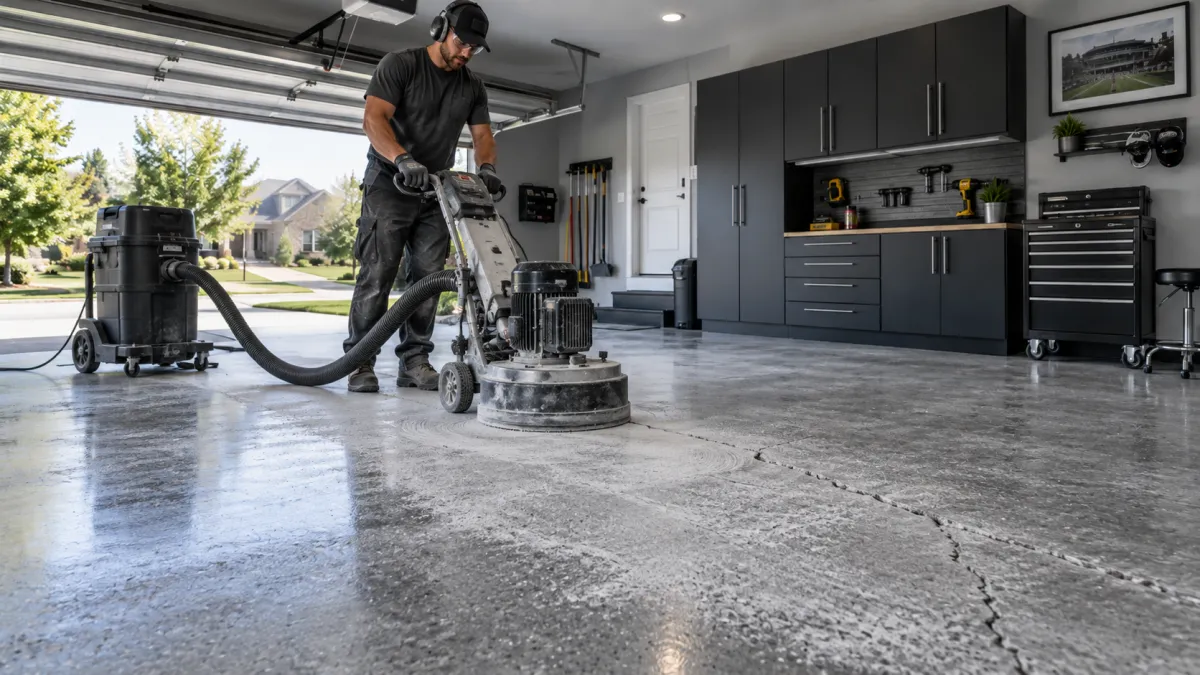
None of these products can compensate for a badly prepared slab. Correct preparation helps the coating bond to sound concrete. ICRI technical guidelines address selecting and specifying concrete surface preparation for coatings and polymer overlays.
Inspect cracks, contamination, laitance, and previous staining.
Evaluate moisture and identify possible vapor movement.
Create the required concrete surface profile.
Repair suitable defects and remove weak material.
Apply each layer within product requirements.
Ask what preparation method will be used and how the installer will handle cracks. Ask which products form the system, not only which topcoat is advertised.

For related information, connect this article to [Garage Floor Coating Installation], [Epoxy Flooring], [Polyaspartic Coatings], [Service Areas], [Maintenance], and [Contact]. Replace each placeholder with the correct 502epoxy.com URL.
Not sure which system fits?
Request a slab inspection and system recommendation based on your garage use, moisture concerns, traffic, and traction needs.
Louisville Recommendation and Frequently Asked Questions

What should I tell the contractor?
Do not ask only for “the strongest coating.” Explain the actual use. Mention sunlight, workshop activity, heavy cabinets, vehicles, gym equipment, chemical storage, water, pets, and the traction you need. The system should be designed around those conditions.
What is the most effective CTA for this search?
A request for a slab inspection works better than a vague sales phrase. It answers the main objection: “How do I know which floor coating is right for my concrete?” A phone option also helps visitors who want a fast answer.
Are polyaspartic coatings always better than epoxy?
No. Polyaspartic coatings can offer useful UV and cure characteristics, while epoxy can provide build, adhesion, and design flexibility. The complete system matters.
Can a coated floor still be slippery?
Yes, if water, oil, or soap is present. Texture and added traction media can improve grip when specified for the space.
How should I compare estimates?
Compare preparation, moisture evaluation, layers, product data, cure guidance, warranty terms, and included repairs—not only the final price.

502 Epoxy installs high-performance garage coatings throughout East Louisville, Prospect, Anchorage, Jeffersontown, Middletown, Norton Commons, Indian Hills, Crestwood, La Grange, St. Matthews and Lyndon.
For a slab inspection and system recommendation:
Plan your Louisville garage floor project
Call or text to discuss your concrete, intended use, coating options, epoxy cure time, and installation process.
Garage Floor Coating Project Gallery


© Copyright 2023 | Website Template by Concrete Launch Secrets | All Rights Reserved